
Our Approach
We combine thoughtful conversation with practical analysis to help you make decisions about philanthropy, legacy and impact, alongside the advisers you already trust.
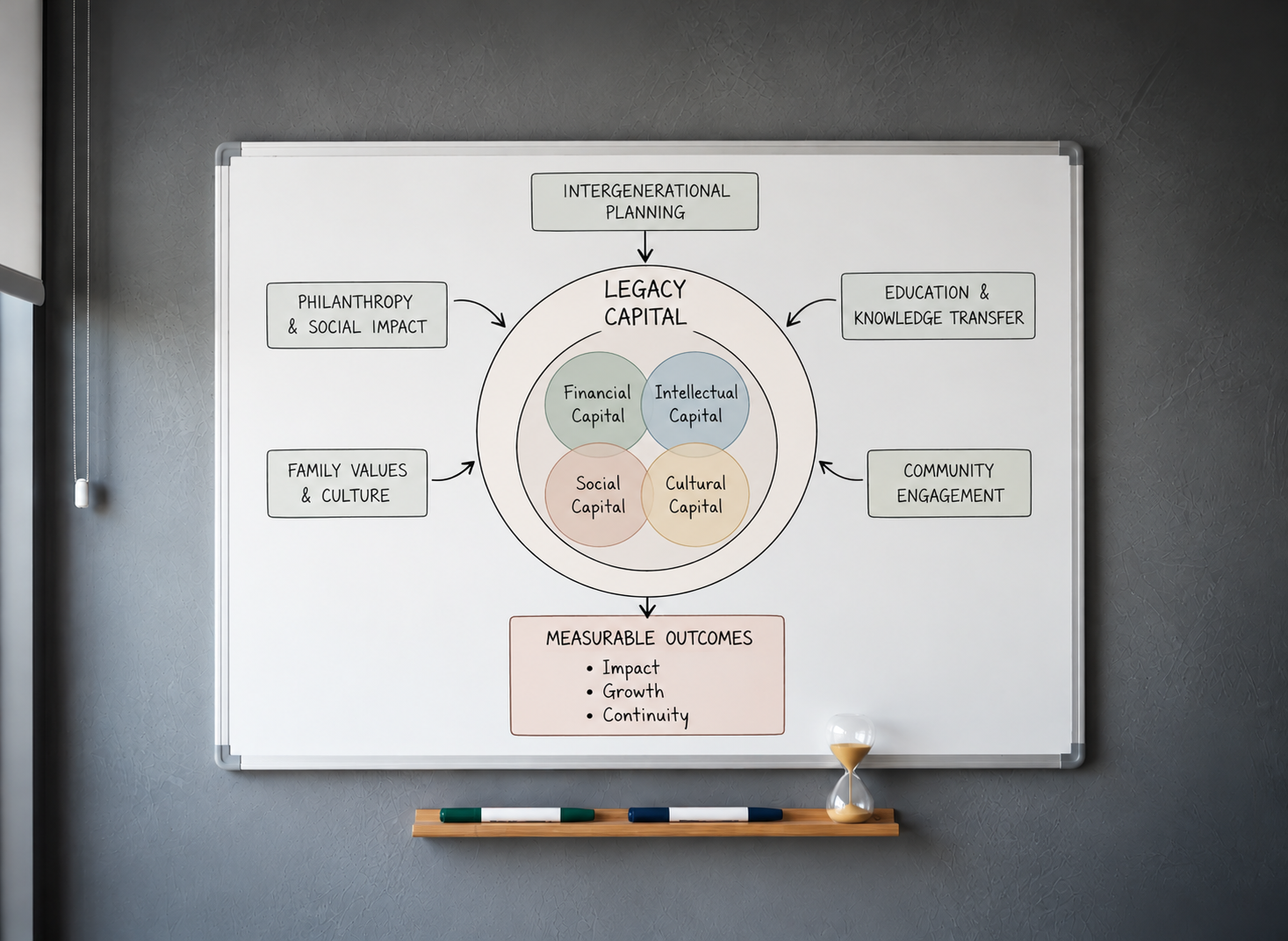
Understanding what matters
Our values, experiences and relationships shape what we hope to achieve through our wealth and giving. We begin by exploring these, making room for different perspectives and identifying the questions that need attention.
From there, we help you develop clear priorities and turn them into decisions you can act on and explain to your family, board or advisers.
Turning purpose into practice
We bring structure, evidence and a sense of proportion. Where useful, we develop a theory of change to explain how your activities and funding are expected to contribute to the change you want to see. We build impact frameworks that identify what to track, how to assess progress and how to use learning to inform future decisions.
A strategy should fit the people who will carry it forward, respond to the needs it seeks to address and provide a useful way to understand progress.
Conscious Capital Coaching
Coaching and facilitation create space to explore the values, experiences and relationships that shape decisions. Conscious Capital Coaching focuses particularly on your relationship with wealth and what you want your resources to make possible.
It can be used alongside philanthropy advice or independently, depending on what is useful to you. We help you develop your own understanding and choices; investment advice remains with your financial adviser.
Find out more on the Conscious Capital Coaching website.
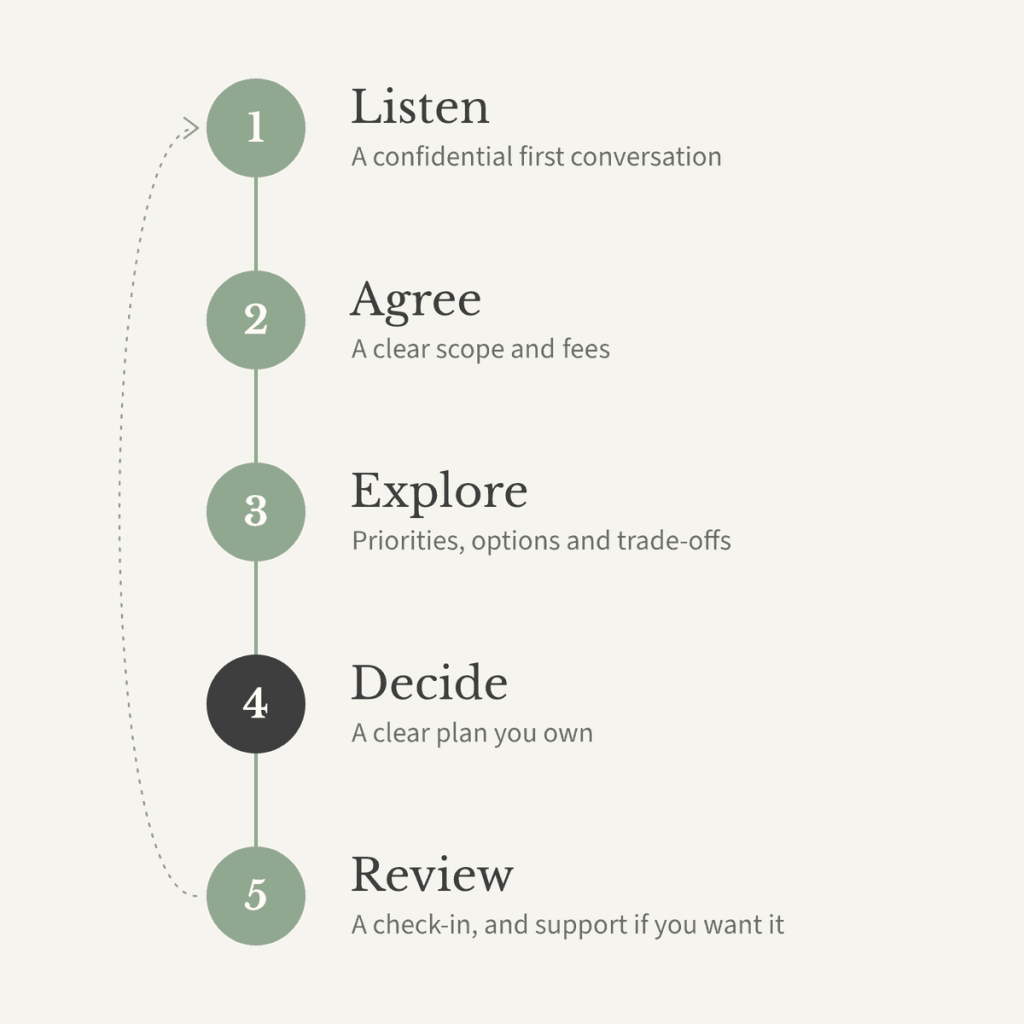
Client Journey
- Listen. A confidential first conversation to understand your situation, the questions you are holding and what you hope to achieve.
- Agree. A proposal setting out the scope, ways of working, timescale and agreed fees.
- Explore. Conversations, review and analysis to understand different perspectives, clarify priorities and consider options.
- Decide. Support to reach informed decisions, with practical next steps and clarity about who will take them forward.
- Review. An agreed opportunity to reflect on progress, learn and adapt, with further support where useful.

